The 5 strongest forex indicators for smarter trading
The 5 strongest forex indicators for smarter trading
Forex trading is an opportunity, but most traders have difficulty with timing, trend-following, and risk management. Tables are rapid, and the cost of analysis can be substituted with hasty judgment. It is where 5 strong forex indicators for smarter trading can come in. The indicators are used to transform price data so that traders can see momentum, trends, and possible reversals. This guide provides the definition of the forex indicators, the importance of the indicators, and how amateurs can implement them step by step without clogging charts.
The Problem Traders Face
New traders usually fiddle with positions on the basis of guesswork or tips on social media. Trades are not consistent without technical confirmation. Other traders put too many indicators, making it very confusing instead of clear. Among the pain points are late entries, premature exits, incorrect interpretation of trends, and disregard for being overbought or oversold. These problems are addressed through a systematic method based on the right indicators that introduces rationality in decision-making. Signs are not predictive,e and they enhance likelihood and discipline.
What Are Forex Indicators?
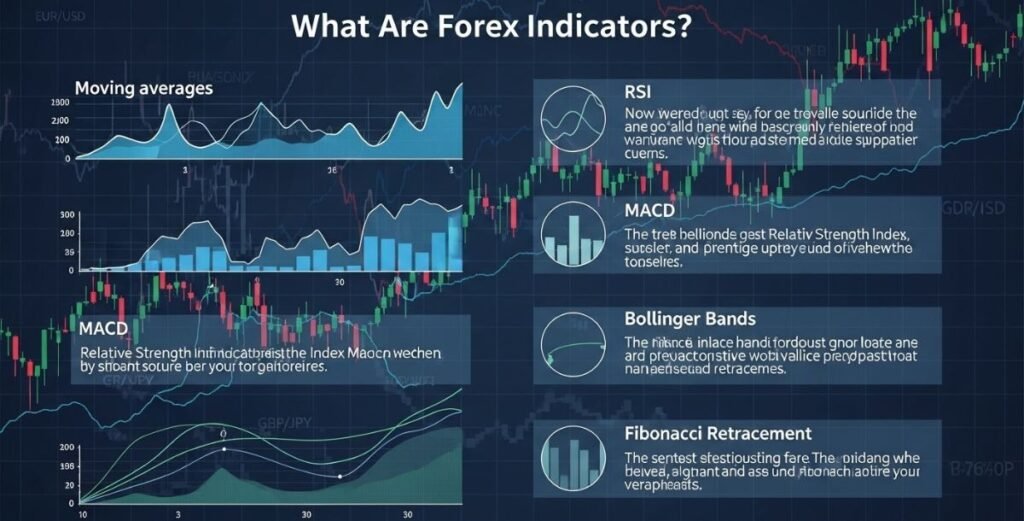
Forex indicators are mathematical ratios depending on price, volume, or volatility. They are displayed in charts and can assist the traders to know the trends, their strength, and the market conditions. They are classified into trend indicators, momentum indicators, volatility tools, and volume-based measures. A combination will give a better picture of the market. The built-in indicators that novice traders can use right from the beginning are supplied on most trading platforms, such as MetaTrader or TradingView.
5 Effective Forex Indicators for Smarter Trading
Moving Average
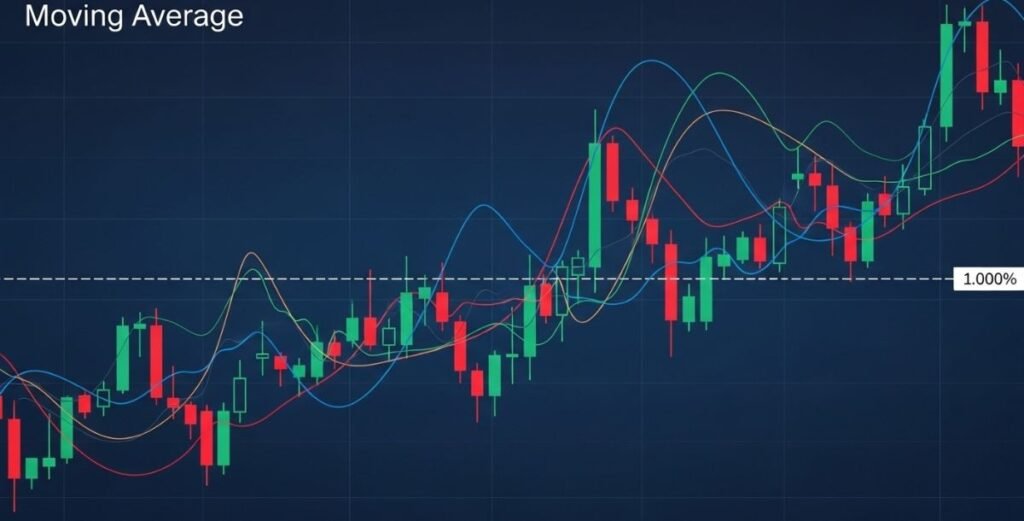
A moving average is a price expression used to indicate the direction. It eliminates short-term noises and assists in determining trends. The easiest way is to use two moving averages, e.g., 50-period and 200-period. Where the short-run average cuts above the long one, then an uptrend is indicated. The downward cross shows possible bearish movement. The moving averages are good in trending markets and assist traders in avoiding counter-trading movements.
Relative Strength Index (RSI)
RSI is an indicator of momentum, which indicates whether a currency pair is overbought or oversold. It ranges between 0 and 100. A reading of above 70 is an indication of overbought, and below 30 is oversold. Traders usually seek the difference between price and RSI in order to identify potential reversals. RSI most effectively applies in range-bound markets where the price moves between support and resistance.
Moving Average Convergence Divergence (MACD)
MACD is a trend and momentum chart. It displays the correlation between two moving averages. The bullish momentum might be enhanced when the MACD line moves above the signal line. Bearish pressure can be indicated in a downward cross. MACD is also applied to track divergence that aids a trader in identifying falling trends before they reverse.
Bollinger Bands
Bollinger Bands track the volatility of the market. They include an upper and lower band moving average. Price hitting the upper band will signify an overextended market. When the lower band is touched, it is possible to feel that there are some cases of overselling. During volatility, bands are widened, and during consolidation,n they are narrowed. This assists the traders in predicting breakouts or reversals.
Average True Range (ATR)
ATR is used to gauge volatility in the market, yet it fails to give direction. It demonstrates the extent to which the price generally varies over time. The traders rely on ATR to define achievable stop-loss and take-profit levels. Greater values of ATR denote more tumultuous markets and thus broader stops are necessary. The indicator is useful in the management of risks and not entry signals.
The Method of Indicators Combinations
It is confusing to use all the indicators at the same time in vain. The combination of a trend indicator, a momentum indicator, and a volatility tool should be used. In case, a trader will have trend direction, entry timing, and stop-loss placement using moving averages, RSI, and ATR, respectively. This would producean organized system rather than noise. Strategies can be tested on a demo account to get a better understanding of what to trade.
Common Mistakes to Avoid
A lot of traders base their decisions on a single indicator without considering the market structure. Others include excess tools, thus sending mixed signals. Making poor decisions by the use of indicators whose mechanisms are not known. Failure to consider longer timeframes is another fallacy. Smaller trends may disrupt larger trends. Loss emotional trading may also result in the abdication of a tested system.
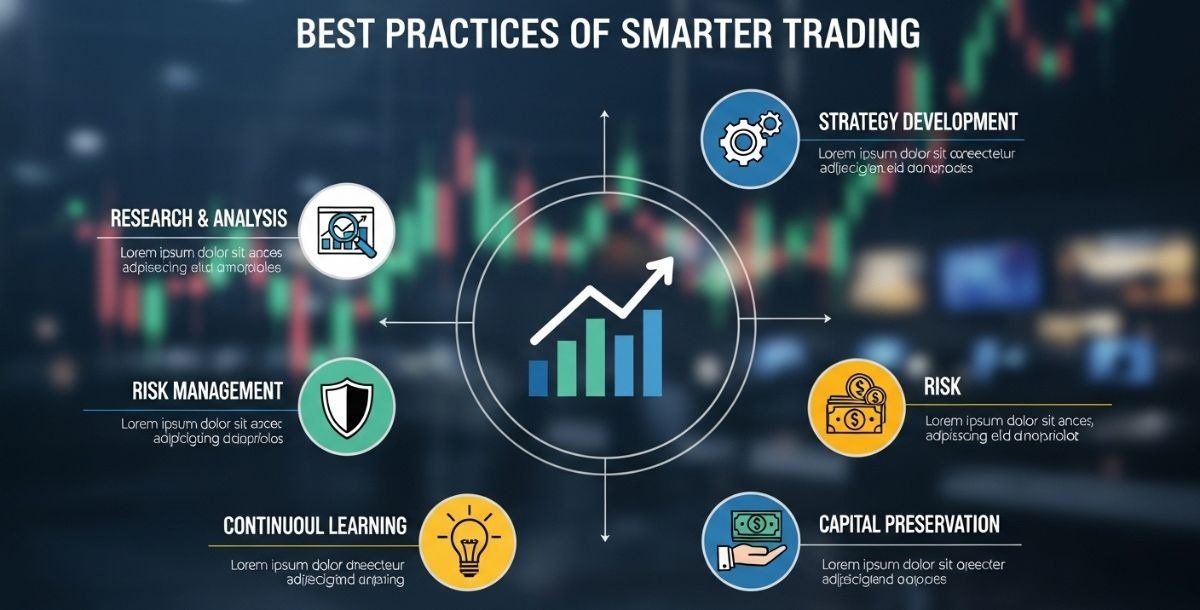
Best Practices of Smarter Trading
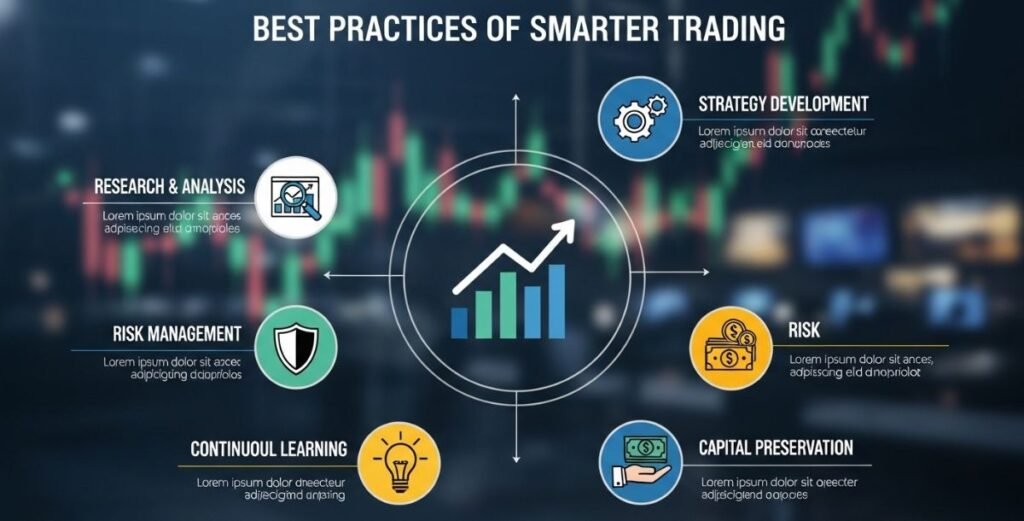
Charts should be easy to use, and only a few tools should be trusted. Add indicators to price action and support/resistance indicators. Control risk through minimizing the amount of loss per trade. The strategies of back testing enhance confidence. Being patient and disciplined helps avoid making emotional choices. Signposts lead to decisions; continual implementation is success.
FAQs
Precision of forex indicators?
They do not make perfect predictions, but enhance them when combined with other analyses.
Which is the most appropriate indicator for a beginner?
RSI and moving averages are easy and useful entry-level instruments.
Is it possible to trade with indicators only?
The indicators are effective when used together with price action and key levels.
Are indicators applicable in every market?
There are those that are better in trends and those that are better in ranges. Market conditions matter.
With which number of indicators should I be satisfied?
Two or three indicators are typically sufficient that are well understood.
Conclusion
The explanation of 5 powerful forex indicators to trade smarter provides the traders with structure and confidence. Trend is defined by moving averages, momentum is measured by RSI, strength is followed by MACD, volatility is indicated by Bollinger bands, and risk is better controlled using ATR. The key is balance. Indicators are used to aid decision-making and not to make decisions. Use a demo account, experiment, and become a better trader using real money. Smart trading starts with smartness, training, and proper equipment.