Live Forex Trading: 5 Support and Resistance Secrets
Live Forex Trading: 5 Support and Resistance Secrets
Live markets are dynamic, and acting with indecisiveness, you are likely to miss or make poor entries. TradeMaster Live Forex Trading: 5 Secrets of Support and Resistance is devoted to one of the strongest bases in technical analysis. Such price levels assist the traders to know where the markets might stall, reverse, or break out. They are also applied to enhance timing, risk control, and real-time trading decisions when properly used. This guide provides details of the meaning of support and resistance, the reasons it is important in live forex trading, and the application of the same in a stepwise manner.
The Fundamental Issue Forex Traders Experience
It is full of unstructured traders in the market. They follow price movement, are emotional, and dependent on chance indicators. Consequently, they buy too late, put stop losses thematically, and sell trades too early. One of the gripes that is often voiced is the inability to know where the price is going. Trading is a guesswork without key levels. Support and resistance offer a guideline that decreases confusion and enhances consistency.
What are Support and Resistance Levels?
One of the price areas where the effect of purchasing power is likely to halt a declining trend is the area of support. The resistance is where the selling pressure usually halts an upward movement. These levels occur due to the traders recalling the previous price responses. The importance of similar zones is that they are monitored by institutions, algorithms, and retail traders. These are not specific lines but areas where supply and demand change.
Master Live Forex Trading: 5 Support and Resistance Secrets
It is first important to understand the Market Structure
Determine the market trend before making levels. An uptrend will create high highs and high lows, whereas a downtrend will create low highs and low lows.
The support is best used during an uptrend as a buying zone. In the downtrends, resistance is more effective as a selling zone. Selling against structure enhances risk. Begin analysis of longer periods, such as H4 or Daily charts, then proceed to lower charts to make entries.
Drawing Zones, Not Lines
Numerous amateurs make thin lines. Realistically, price responds not to exact points but in regions. Mark greater areas with groups of highs, lows, and consolidation areas. The level is more intense when two or more price reactions take place within one area. During live trading, these areas usually become turning points. Periodically zoom out to avoid overfitting short-term noise.
Monitoring Price Action at Important Levels
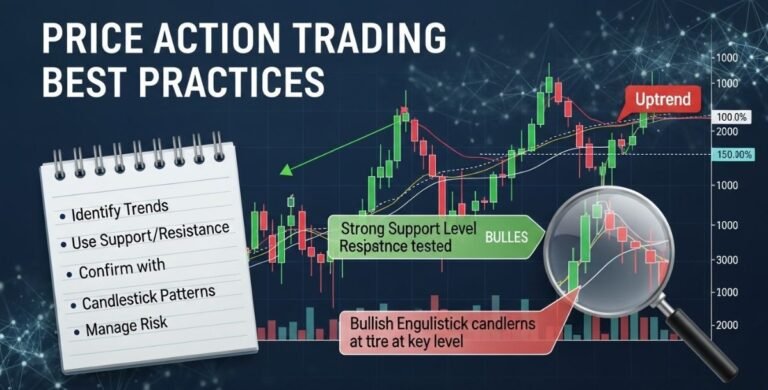
Levels alone are not enough. You have to notice the price response on reaching them. Powerful rejection candles, wicks, or reduction of momentum are an indication of reversals. High momentum breakouts and good candle closes indicate that a level can break. Whereby, in these situations, past resistance may end up becoming support and the other way round. This is what is referred to as a role reversal in active forex pairs.
Integration of Support and Resistance and Confluence
Confluence refers to several factors converging on a common ground. It is more likely to be a support zone with a moving average, Fibonacci level, or trendline. One signal is hardly ever used by professional traders. They seek piled evidence before getting into a trade. Confluence enhances confidence and eliminates false entries.
Risk Management on Major Levels.
Even strong levels can break. Risk management is necessary that way. Stop losses must not be put on zones but on areas beyond them. The size of positions is more important than foresight. Trading a small percentage to risk your account is good in case there is sudden volatility. There are support and resistance that control the entry and exit points, and there are risk rules, which safeguard capital.
Application to Live Trading
When trading, it is best to start with major levels highlighted. Awareness of the news that can lead to volatility is through the use of economic calendars. Wait until the price goes to the level. Next, change to shorter periods, such as M15 or M5, to narrow down entries because of price action. It is advisable not to impulsively trade in the middle of ranges where there is no definite level.
Some of the most common errors made by traders
It is confusing to put too many lines in the charts. The other mistake is that touching all such touches will, in turn, turn the price. Markets are also prone to breaking strongly. This occurs because when one pays attention to only short charts while ignoring higher timeframe levels, they make poor decisions. Premature exits are also brought about by emotional trading around major levels.
Best Practices of Consistency Results
They should have kept charts and concentrated on key areas. Test your strategy to understand the reversion of price to levels in the past. During active sessions, such as London or New York,k when the liquidity is greater. Trade journal to enhance pattern recognition. Discipline is the source of consistency and not prediction.
FAQs
Are levels of support and resistance valid?
They are not ideal, yet everybody respects them as they are watched by many traders, making them more effective.
What is the most appropriate time frame for these levels?
The stronger levels are displayed in higher timeframes. Reduced timeframes are useful with specific entries.
Are indicators substitutes for support and resistance?
The indicators assist in analysis, and they are not to substitute price levels.
Why do levels sometimes fail?
Powerful news or institutional orders are able to snap the zones.
Is this strategy applicable to the novices?
Yes. It qualifies as one of the easiest to learn methods of forex trading.
Conclusion
Master Live Forex Trading: 5 Support and Resistance Secrets emphasizes the systematic way of making sense of the market. Traders have clarity in fast-moving markets by learning about market structure, marking zones appropriately, observing price movement, confluence, and risk management. These values make decision-making better and eliminate emotional trading. Marking levels on a test account is your next action, and see the reaction of the price before running the risk of real money.