
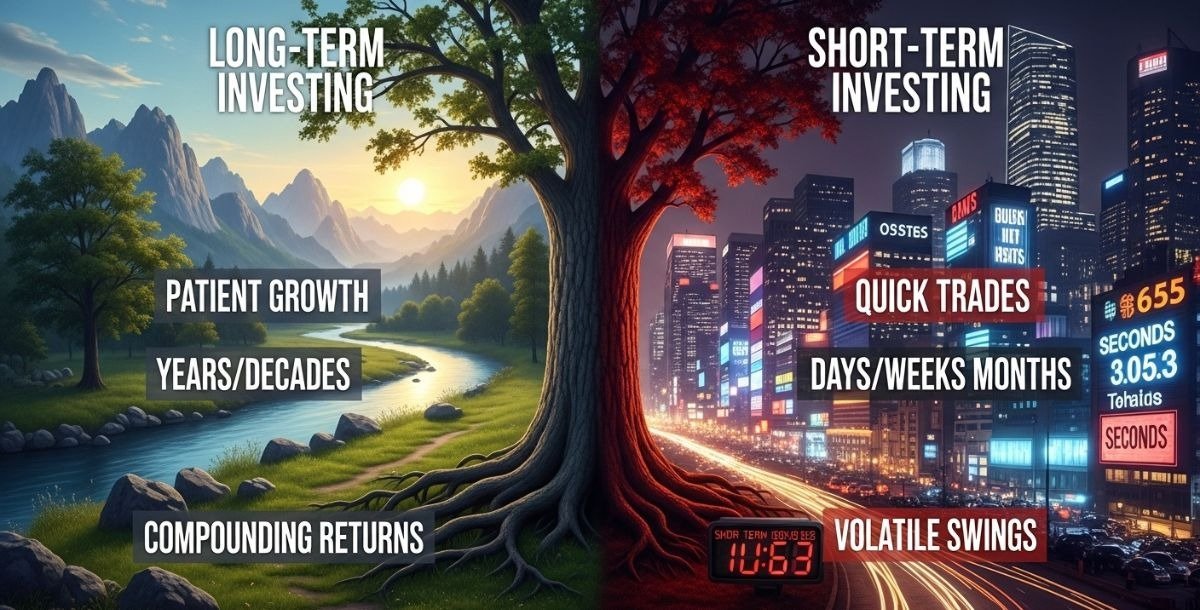
Compared to long-term investments, short-term investments involve less risk, greater returns, and less guidance.
Understand the major distinctions between long-term and short-term investing, risks, rewards, tools, and the best practices to make smarter decisions.
Long-run vs Short-run Investing: The Major Differences, Risks, and Payoffs
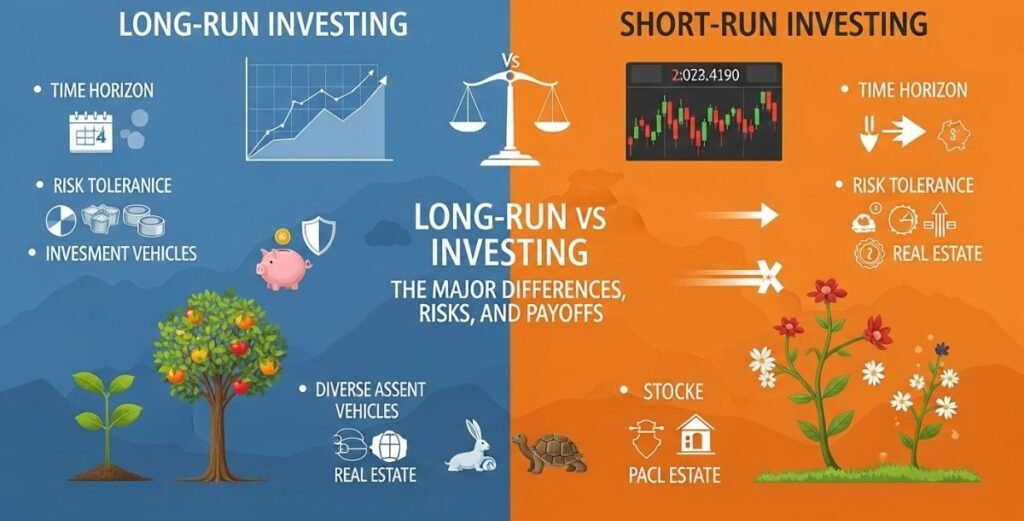
Investment is among the finest means of increasing wealth, and most amateurs will experience confusion when it comes to deciding on long-term investments and short-term investments. The two strategies have a certain promise of returns, but they operate in a very different manner, and they fit in various financial objectives. It is important to know what long-term and short-term investing are all about before putting your money to the test, particularly when you know you will receive regular returns and not incur expensive errors.
The Importance of Strategy in Investing and What Is Investing?
Investment refers to allocating funds into property such as stock, bonds, ETFs, or mutual funds with the anticipation of making a profit. The approach will dictate the duration of your invested money as well as the risk and proactivity in your portfolio.
Long vs Short-Term Investing: The Definition is Quite Simple
What Is Long-Term Investing
Long-term investing is based on keeping the assets over a period of several years, commonly 5, 10, or even 20 years. This is aimed at enjoying the benefits of compounding, expansion in the market and a decline in short-term volatility. Examples of common long-term investments are index funds, retirement funds, blue-chip investments, and real estate.
What Is Short-Term Investing
Short-term investment is meant to realize profits after a significantly shorter period of days to months. It is dependent on the fluctuations of prices but not on the long-term growth. They can be day trading, swing trading, options trading, short-term crypto or forex trades, etc.
Major Long-term and Short-term Investing Differences.
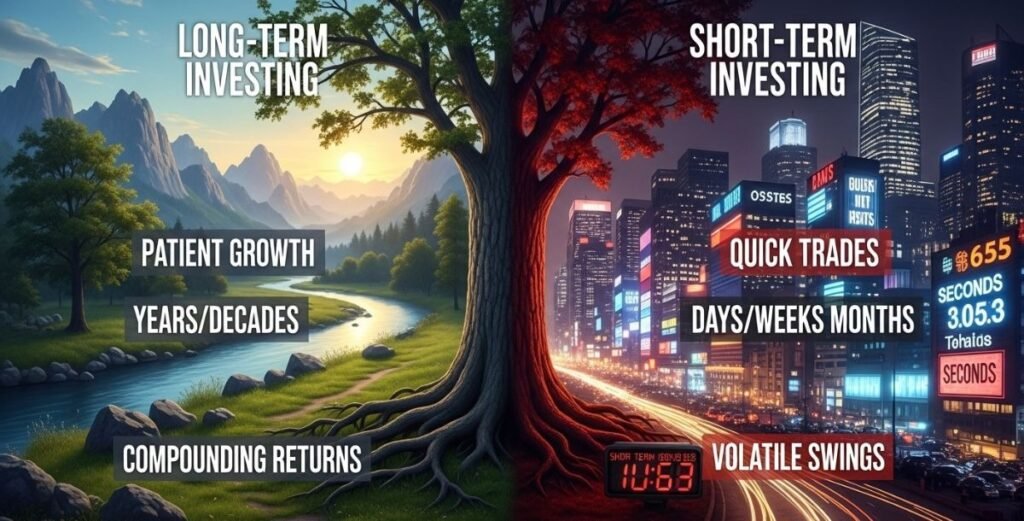
Time Horizon and Commitment
Patience is rewarded by long-term investing. Investors remain committed during good and bad market days basing on the past developmental trends. The short-term investment is characterized by the necessity to be alerted all the time and to respond to the news on the market and price fluctuations.
Risk and Volatility
The long term investing is usually less risky since the volatility of the market is leveled in the long run. Investing in the short run is riskier as the price may vary quickly based on the news, earnings, or even the market mood.
Effort and Skill Level
Long-term investing is appropriate for beginners as it does not involve as many decisions. Intricate to short-term investing is a skill-based trade that is usually more appropriate to an experienced trader with technical analysis and market psychology expertise.
Taxes and Costs
The long-term investments are commonly favored by reduced capital gains tax and reduced transaction fees. The trades that are short-term can initiate higher taxes and recurring brokerage fees, which might decrease the net returns.
Long-Term Investing Risk and Rewards.
Compounding is the principal benefit of long-term investments. Small returns are likely to accumulate over time. It is also less stressful, as investors do not have to respond to everyday noise in the market.
Short-term Investment Risks and Rewards
Quick profits and the flexible nature of short-term investing are the opportunities. Proficient traders can exploit market inefficiency. But, losses may occur as quickly. Short-term emotionality, misuse of leverage, and lack of discipline are the leading causes of low performance by many short-term investors.
Pragmatic Solutions: Selecting the appropriate Strategy
Step 1: Specify Your Financial Objectives.
Long-term investing is normally more suitable if you are aiming at retiring, wealth accumulation, or securing your finances. Short-term investing can be more appropriate, but only in case you are interested in making short-term money or trading as a profession.
Step 2: Campus Risk Tolerance Assessment.
Question yourself as to how you respond to losses. In case declines in the short-term market trigger anxiety, long-term investment is less emotional. Short-term investment necessitates a comfortable stomach with numerous victories and failures.
Step 3: Select the correct Tools and Platforms
Robo-advisors, retirement accounts, as well as low-cost index funds are often used by long-term investors. Advanced trading platforms, real-time charts, and technical indicators are tools used by short-term investors. Most investment applications currently have both of these options, and investors can mix strategies in a single portfolio.
Fraudulent Investment Pitfalls
Planning is one of the biggest errors that can be made. Panic-selling should not occur in the short term as a result of a short-term decline in prices. The other error is overtrading, in which short-term trading is conducted on a frequent basis, consuming profits by fees and losses.
Best Practices in Smarter Investing.

The two strategies need to be diversified. Risk reduction is achieved by spreading investments over the asset classes. Timing the market is not as important as consistency, particularly to long-term investors. In the case of short-term investment, strict stop losses and position sizes are used to protect capital. Regular contributions and periodic reviews of the portfolio are better in the long term, and they enhance performance.
Is it possible to mix Long and Short-term Investing?
It is true that a hybrid approach is deployed successfully by numerous investors. A long-term portfolio is a core and is a stable asset, whereas a smaller percentage of capital is used in short-term trades. This is a moderate growth and opportunity, and is not very risky.
FAQs
Should long-term or short-term investing be the best choice for beginners?
Yes, long-term investing is usually more appropriate for beginner investors as it does not demand active management and it minimizes the effects of short-term fluctuations in the market.
Is it possible to make profit through short-term investment?
It may make a profit, but it is hard to be steady. It takes discipline, experience, and a lot of risk management abilities.
What is the amount of money required to begin investing?
Numerous locations enable you to begin with low balances. In the long-term, it is usually appropriate to invest regularly with a slow rate of contribution.
Should long-term investing be a sure way of making money?
There is never a guarantee of a profit in any investment, yet long-term diversified investing is seen to yield positive returns over a long period of time.
Is it necessary to hire professional tools/advisors?
With the help of robo-advisors, financial planners, or trusted investing platforms, it could be possible to find the right way to act according to your intentions and avoid expensive errors.
Conclusion
A knowledge of long term and short term investing will assist you to make a wise decision depending on your objectives, risk levels, as well as lifestyle. Long-term investment is more stable, compound, and has a reduced stress level, whereas short-term investment is more flexible and has a better chance of high gains with a high level of risk. The most intelligent thing to do is to select a strategy that suits you or a mixture of both intelligently. It helps to have clear objectives, employ the appropriate tools, and be consistent to achieve improved outcomes.