Best Forex Guide For Dinar Day Trading.
Get to know the optimal leverage in forex day trading as an amateur. A risk mitigation strategy step-by-step guide to trade safely.
The Best Leverage to Start with Forex Day Trading: A Safe Start Guide
Forex day trading is appealing to beginners due to a low start-up point, rapid trades, and the potential to achieve easy profits. Nevertheless, it is leverage that unobtrusively determines whether a novice will make it or lose money quickly. Maximizing profit is not the purpose of picking the optimal leverage when starting forex day trading. It is of surviving long enough in order to learn, grow, and trade in a consistent manner.
What Does Leverage Day Trading Forex?
The forex leverage enables the trader to trade a huge position with a minimal amount of capital. It comes in the form of a ratio, i.e. 1: 10, 1: 50 or 1: 100. In the case of 1: 50 leverage, a trader can manage a $5, 000 position by investing only 100 of his or her own money. To day traders, leverage renders short-term price fluctuations important. There can be substantial gains involved in small market movements. Meanwhile, the same motions may result in losses within a short period in case the leverage is excessive.
The Reason Beginners Have a Hard Time with Leverage
The majority of novice entrants into the forex do so with unrealistic ideas. Instead of a tool of risk management, they view leverage as a quick way to get profits. Such an attitude causes several issues at the beginning. There is a high leverage that increases the losses as much as the profits. Novices tend to open large positions that their experience cannot manage. Even minor errors like making early entries or tight stops swiftly become losses on accounts. This is followed by emotional trading, which results in revenge trades and more harm.
Forex Trading: Best Leverage when starting as a beginner
There is usually a range of 1:10 to 1:30 as the best leverage for forex day trading beginners. This is a wide area to enable traders to actively trade in the market without exposing their accounts to excessive risk. Reduced leverage allows newcomers to relax. It minimizes emotional stress and allows traders to study price action, technical indicators, and teach trade execution. Through managed leverage, losses become manageable and educative instead of devastating.
The Process of Selecting a Leverage Stepwise

The initial one is the knowledge of your account size. A small account does not imply that you need to take more leverage. It implies that you need to trade smaller position sizes. The second is the risk per trade definition. Novices must not take more than one or two percent of their account in one trade. This rule should be nurtured by leverage, rather than violated. The third step is leveraging matching to strategy. Scalping needs to be tighter, and the day trading arrangements, which are structured, need moderate leverage. Novices cannot afford to engage in strategies that require them to have high leverage to make a profit. The last stage is to test leverage on a demo. This assists traders to understand how margin, drawdowns and stop losses would act under the pressure of the market environment and without financial constraints.
Real-Life Application of a Safe usage of leverage
An example of a novice with a trading account of 1,000, on leverage of 1: 20, would be considered. This will enable one to control up to $20,000 positions, yet responsible trading will imply a lot less. Assuming that the trader is risking one percent per trade, then it is 10 dollars. Leverage will help the trade and not jeopardize the account with appropriate position sizing and position stop loss. Even a losing streak is easy to handle, thus being able to learn and improve.
Now compare this to 1:200 leverage. The trader in question can create large positions only to have all the years of work washed away in a few seconds. It is not a strategy difference. It is a leverage discipline.
Rare Leverage Missteps Intermediate Investors Cause
One of the errors made is to think that with increased leverage comes increased ability. In practice, professional traders tend to apply less leverage, since consistency is important, as opposed to speed. The second error is not taking into account the stop losses. One of the quickest methods of losing money in the forex day trading is high leverage without stops. New entrants also mix the leverage offered by the brokers with the recommended leverage.
Tips and Tricks of Working with Leverage
To be successful, beginners’ leverage is treated as a support tool rather than an engine for making profits. They pay attention to the quality of trade and not the position size. Risk management is a regular aspect that must precede profit targets. A trading journal can be used to keep track of the performance of leverage. Trading is a review that determines whether leverage decisions are in line with strategy results. It is stable because fixed leverage is in use as opposed to daily variation. Leverage should not be increased when one has suffered a loss because this will result in emotional trading.
Equipment and Devices that assist beginners in managing leverage
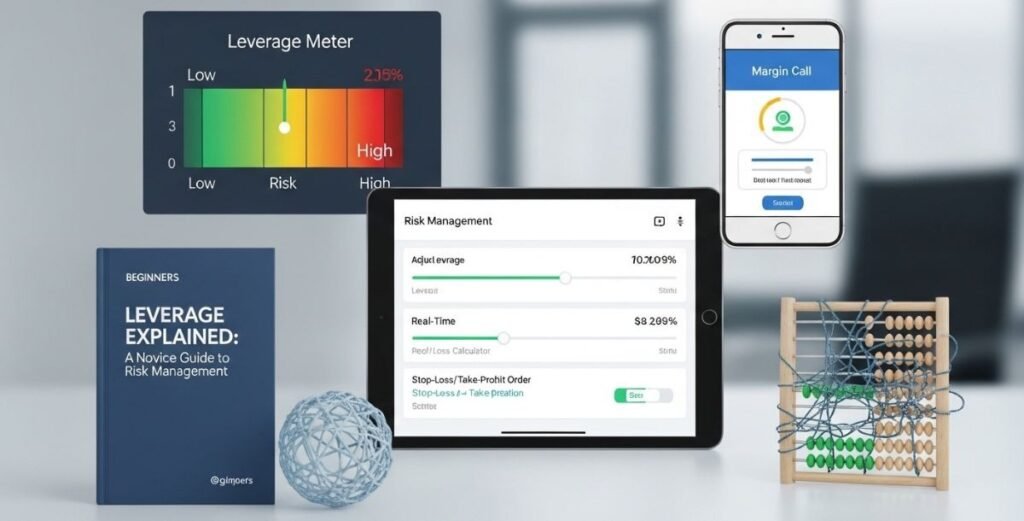
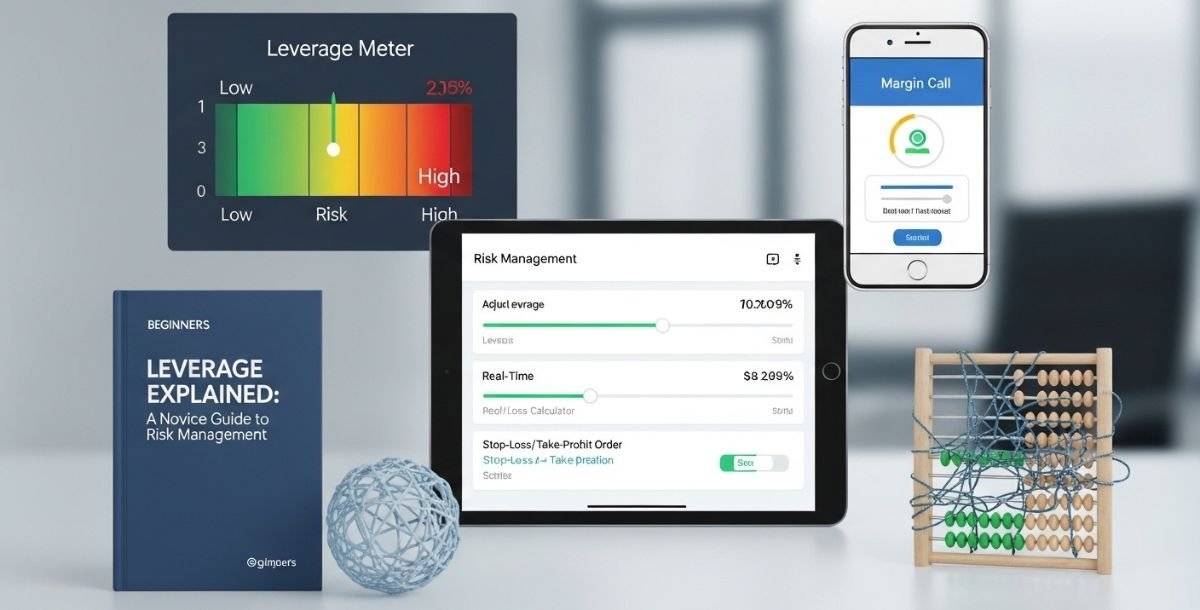
Trading platforms have in-built risk calculators, margin alerts, and position size applications. These characteristics assist the novice in using leverage properly without making errors with their hands. Numerous regulated brokers permit adjustments of leverage on each account. New entrants need to select brokers that provide flexible leverage, a good education section, and a clear margin policy.
FAQs
Which is the safest leverage to forex day trading beginner?
Beginners are normally at the safest leverage of between 1:10 and 1:30. This is a range that balances the chances with risk control.
Is it possible to trade small lot sizes on high leverage as a beginner?
Yes, however, it usually results in overconfidence and bad habits. Less leverage and adequate position sizing are more effective.
Is leverage a win rate factor?
The leverage does not alter the win rate, but it influences the amount of gain or loss to be incurred in each trade. Mistakes are exaggerated by bad leveraging decisions.
Is there a day trading leverage or swing trading leverage?
Yes. Day trading relies on moderate leverage, whereas swing trading usually needs less leverage because of holding periods.
Should beginners alter leverage with learning?
The leverage must be changed once the development of consistent profitability and good risk management expertise has been acquired.
Conclusion:
The forex day trading beginners need to be selective with regard to the best leverage so that they are only involved in what will protect them and not thrill them. Reduced leverage will make beginners less vulnerable to market fluctuations, emotional management, and develop actual skills. It can be tempting to have high leverage, yet it usually falls short of learning journeys. Begin with safe leverage and then work towards impeccability, and allow experience to subsequently make changes. The second stage is the opening of a demo account, testing leverage parameters, and gaining confidence, then risking real money.