Overtrading Risk Management in Currency Trading Guide.
Overtrading Risk Management in Currency Trading Guide
One of the quickest ways for traders to lose money in the forex market is through overtrading. Novices and even seasoned traders venture into too many trades without a proper plan, as they are mostly guided by emotions and not strategy. Overtrading Risk Management in Currency Trading: How to Protect Your Capital is based on the focus on the detection of this issue and the implementation of the best practices to buy and sell money more safely and regularly. It is imperative to know how to survive in currency trading in the long run, and this is possible by knowing how overtrading occurs and how it can be managed.
What Does Overtrading Mean in Currency Trading?
Overtrading is made possible when a trader trades in large numbers of positions within a short time or trades above his or her risk capacity. This is usually done without due analysis, discipline, or risk limits. Simply put, overtrading refers to the act of trading in a manner that is over and beyond what your strategy or account capital can fully sustain.
Why Overtrading Is So Common
The forex market operates on a 24-hour basis, thus providing twenty-four-hour opportunities. The easy accessibility to platforms, leverage and quick price fluctuations are tempting traders to continue trading despite unfavourable conditions. Such emotions as greed, missing out, and revenge trading are also significant contributors.
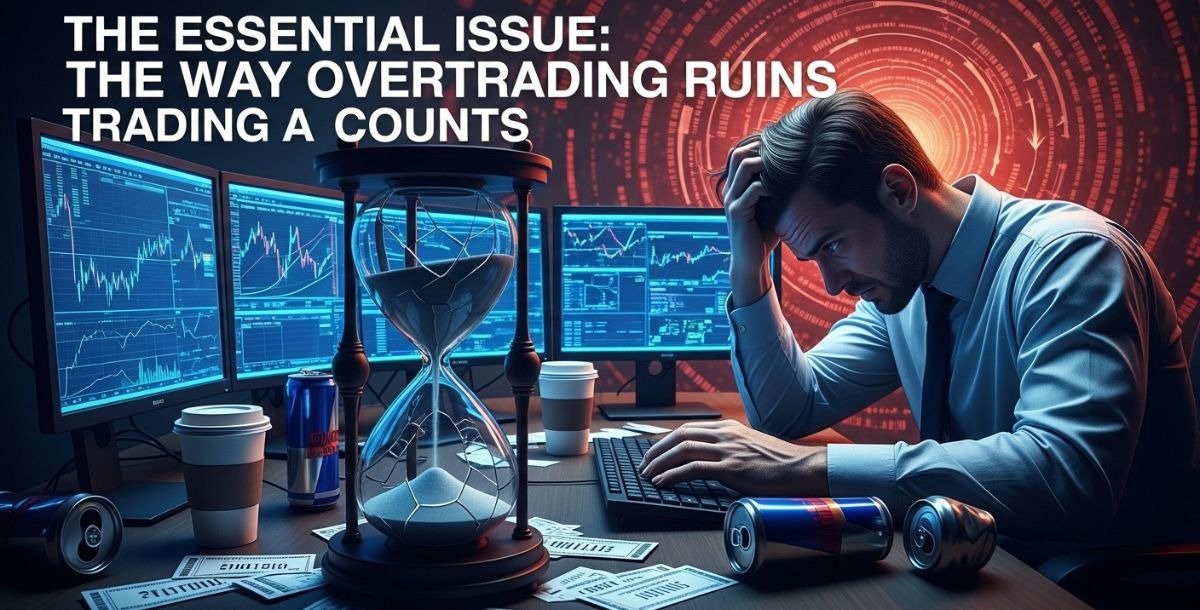
The Essential Issue: The Way Overtrading Ruins Trading Accounts.
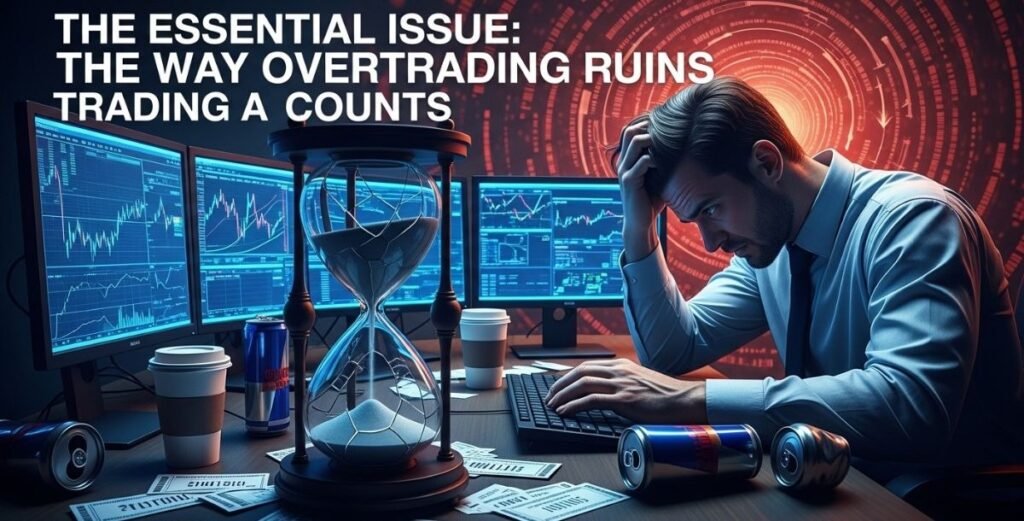
The majority of the traders will not incur losses due to a poor strategy. They lose due to excessive trading and disregarding risks.
Key Pain Points Traders Face
Excessive trading raises transaction costs, spreads and/or emotional strain. Minor losses accumulate at a high rate, consuming capital and belief. The other significant problem is forgetfulness. Impulsive exits and entrances are caused when traders jump between trades,s resulting in reduced quality in their decisions.
Overtrading Risk Management in Currency Trading: The Reason Why It Matters
Good management of overtrading risk in currency trading assists traders to guard against capital, decrease emotional choices and remain steady.
Capital Preservation Comes First.
Any strategy will not work without capital. The management of risk also makes sure that the losses are minimal and can be managed to enable traders to remain longer in the market.
Emotional Control Enhances Performance
Restricting trades helps reduce stress and emotional exhaustion. It is better to have fewer high-quality trades, which will result in better overall.
How to Deal with Overtrading Risk Step-by-Step.
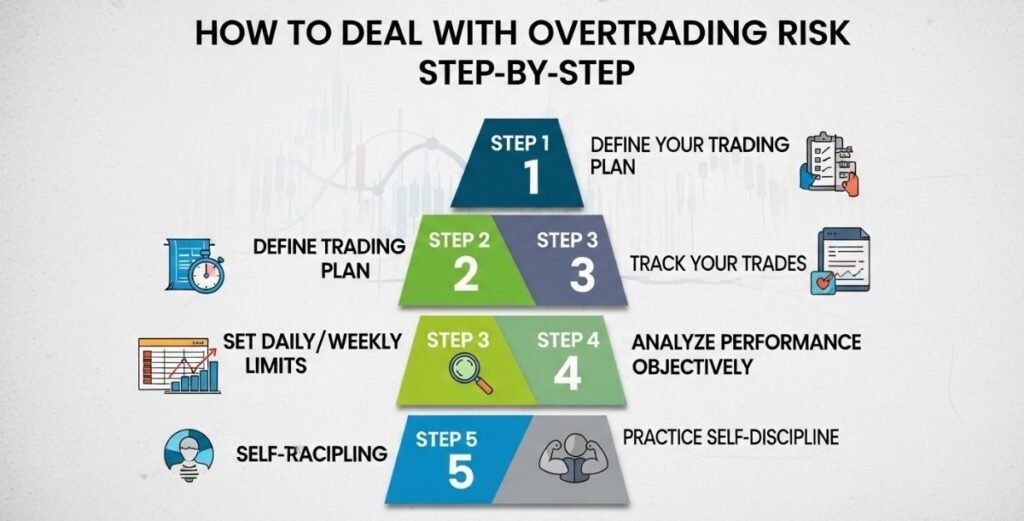
Additional step 1: Establish a Daily and Weekly Limit to Trade.
Plan beforehand the number of trades you are to have in one day or week. When the limit is attained, quit trading. It is a mere guideline that eliminates emotional overtrading and enforces discipline.
Step 2: Define Risk Per Trade
Whenever you get into a trade, risk not more than a specific percentage of your account, usually 1 per cent or 2 per cent. This cushions your capital when you are not winning.
This can be automated by position sizing calculators and trading platforms.
Step 3: Trade with only High Probability Setups.
Develop explicit entry regulations and trade upon satisfying those regulations. In case no arrangement is visible, it is a justifiable choice to remain out of the market.
In currency trading, quantity will never beat quality.
Resources and Applications that can be used to manage overtrading.
The overtrading risk can be greatly minimised by the use of modern trading tools, which are highly effective when applied appropriately.
Trading Journals and Analytics Platforms.
Trade frequency, win rate and emotional patterns are monitored with the use of journaling tools. Visual representation of data will assist the traders in identifying overtrading patterns and rectifying them.
The Risk Management in Trading platforms.
Most of the platforms also have integrated risk management measures such as stop-loss orders, trade limits and alerts. These functions are useful in the provision of discipline.
Top Ten Blunders Traders Commit with Overtrading.
Attempting to recoup losses in a short period of time is one of the biggest errors. This usually results in revenge trading and increased losses. The other mistake that should be avoided is the confusion of activity and productivity. More trades are not an indication of improved performance. Uniformity is a result of supervised performance.
Long-Term Capital Protection Best Practices
Focus on Process, Not Profits
Effective traders measure performance not on short-term returns, but by adherence to rules. This attitude eliminates emotional tension.
Use Time Filters
Only trade at particular market sessions when you have a good strategy. It is advisable not to trade when the market is low-liquid or random.
Take Scheduled Breaks
Getting out after a losing trade or series will avoid emotional decision-making, hence will help refocus.
Commercial Picture: To whom do Risk Management Tools benefit the most?
The advantage of beginner traders is that they have structured risk regulations that do not allow early account blowups. Analytics and journaling are employed in refining discipline by intermediate traders. The professional traders are dependent on tight risk structures to hedge massive capital and ensure consistency over the market cycles.
FAQs
What is overtrading in forex?
It is overtrading, where too many trades are opened without adequate analysis or risk management and are more often than not due to emotions.
What is so bad about overtrading?
It enhances losses, emotional anguish, and transaction expenses, resulting in depleted accounts quickly.
What is the number of trades that are safe in one day?
No set limit, but most traders have a set daily limit which depends on the strategy and market conditions.
Is it possible to prevent overtrading using risk management?
Yes. Limitations to trade, fixed risk per trade and journaling greatly reduce overtrading behaviour.
Are risk management trading tools required?
Discipline is easier and more uniform with the help of such tools as position calculators and journals, which are not mandatory.
Conclusion
It is not about trading less or having no need for Overtrading Risk Management in Currency Trading: How to Protect Your Capital. It is trading more intelligently, with well-defined regulations and risk control. Traders can ensure capital security and enhance long-term performance by restricting their trading frequency, size of their position, and the use of supportive tools.
The next step is simple. Evaluate your trading habits, establish definite risk boundaries, and concentrate on good structures and not the daily market presence.