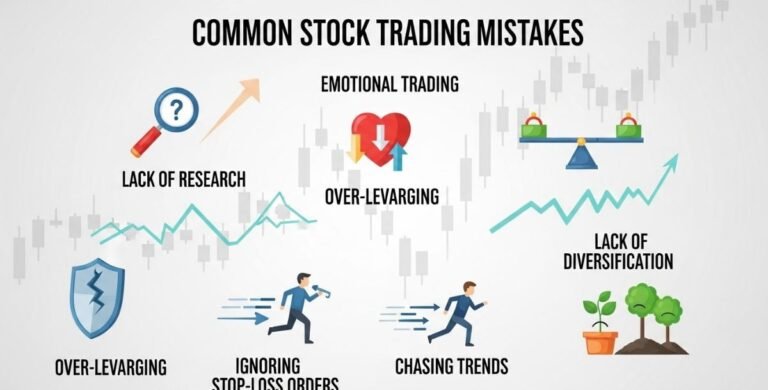

Stock Market Glossary Terms Explained: Investment Terms.
Understand a full stock market Glossary with easy-to-understand definitions, examples, risks, tools, and step-by-step instructions on how to be a new investor.
Stock Market Glossary for Beginners: Learn Key Market Terms Step by Step

The beginners may find it overwhelming when they enter the stock market. The investment process can be daunting with the use of charts, numbers, and words that one is not familiar with. This is the reason why it is necessary to have a stock market glossary for beginners. Learning the fundamentals of the market bit by bit will enable new investors make informed choices rather than basing such on conjectures or social networking advice.
Why Stock Market Terminology is a Problem for Beginners
Language confusion is the greatest predicament that beginners experience. Such terms as equity, dividends, or market cap are all language spoken all over, yet seldom discussed in simple terms. It is such confusion that results in fear, hesitation, or ineffective investment decisions. New investors purchase stocks without having the basics, and the risk of incurring losses becomes higher. The first useful solution to smarter investment and preventing beginner errors is learning the correct vocabulary.
What Is a Stock Market Glossary 101?
A stock market glossary is a list of often-used terms of investing described in simple terms. It is not based on technical definitions but rather on clarity and practical application. With this style of glossary, beginners can acquire knowledge one by one and develop a solid base to then proceed to higher-level strategies or tools.
The Stock Market Glossary beginners guide to the Important Market Terms

Stock and Share
Stock is the ownership in an organization. One unit of such ownership is called a share. When you purchase shares, you are making yourself a part-owner of the business.
Stock Exchange
A stock exchange refers to a market in which stocks are sold and bought. The popular ones are the New York Stock Exchange and the London Stock Exchange.
Index
An index is used to follow a collection of stocks. These are the S&P 500 and the FTSE 100. Indexes enable investors to know about the performance of the market.
Market Capitalization
Market capitalization, or market cap, depicts the size of a company. It is computed as a product of the share price and the total outstanding. Companies have been categorized into large-cap, mid-cap, and small-cap.
Bull Market and Bear Market
The bull market implies that prices are inclined to increase. A bear market implies a decline in prices. These are terms that assist the investors in knowing the direction of the market in general.
How to Invest Building by Building
Equity Investments
Equity means ownership. Stocks and shares are classified as equity investments. Their advantage is growth potential, but they are associated with market risk.
Bonds
Bonds are credits that are loaned to countries or businesses. They tend to have steady returns, and they are regarded as less risky than stocks.
Mutual Funds and ETFs
Exchange-traded and mutual funds consist of funds that are made available to several investors to invest in several assets. They are mainstream entry tools as they offer diversification.
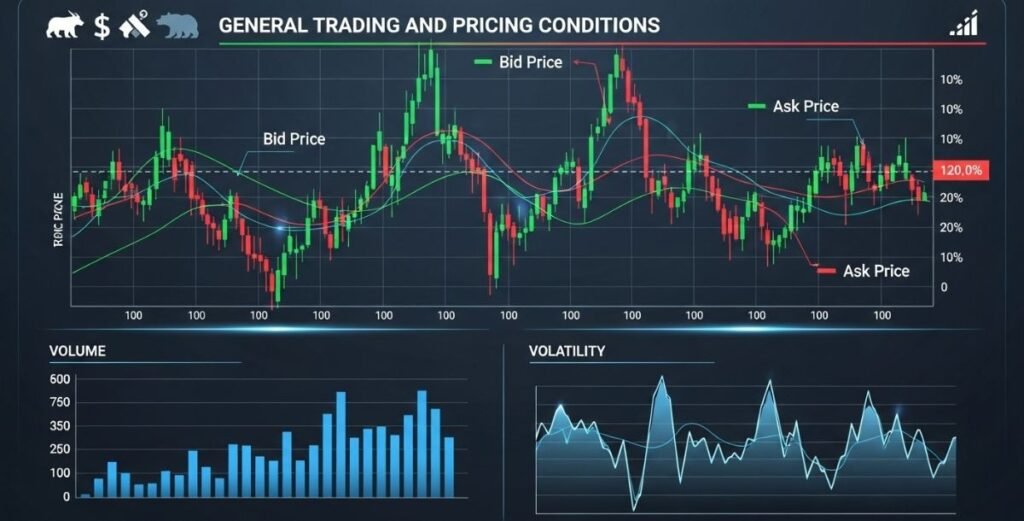
General Trading and Pricing Conditions.
Bid Price and Ask Price
The bid price is the amount that purchasers are ready to pay. The sellers want the ask price. The difference is referred to as the spread.
Volume
Volume is the number of shares that are traded within a time period. Large volume usually shows that there is a lot of interest among the investors.
Volatility
Volatility is used to determine the movement of a stock. Volatility is riskier and also has a greater reward potential.
Dangers Every Amateur Needs to Know
Risk is part of investing. Novices tend to overlook terms of risk, thus making bad choices.
Risk Tolerance
The risk tolerance is the extent to which the investor can take a loss emotionally and financially. The knowledge of this assists in selecting the appropriate investments.
Diversification
Diversification refers to the allocation of investments in various assets. It dilutes the effects of a bad-performing investment.
Liquidity
Liquidity is a measure of the ease of acquisition or selling an asset. Real estate is mostly less liquid compared to stocks.
Simple Solutions to Start with Market Terms
It is not sufficient to learn words. Beginners are expected to put them into practice. Demo trading accounts are useful in getting to learn the actual market behavior without putting money at risk. On investment applications, educational platforms, and user-friendly broker tools, these terms are frequently described within the dashboards. This will make learning more practical.
Understandable Amateur Blunders When It comes to the language of the market
A typical error is the confusion of trading and investing. The other one is failure to understand terms associated with risk and putting more funds than he/she can afford to lose. Novices also over-rely on gratuities without learning the lingo to recommendation. This normally results in emotional decisions and losses.
Most Effective Stock Market Term Learning Practices
The first words to be used are the ones used most frequently, and they should be used when reading market news. Simple charts and beginner tools should be used over trading software that is highly difficult. Going back to a stock market dictionary for a beginner is a good way to enhance memory. Step learning is the way to gain confidence and future success.
Aids and Assistances that Assist the Novices
Most of the stock market applications, online brokers, and education tools offer built-in definitions of the most important terms. These services assist beginners in gaining knowledge of markets during investment. Educational materials with real investment tools help beginners to learn and develop simultaneously without being pressured.
FAQs
How to know stock market terms as a beginner?
The most suitable is step by step learning through a glossary, with the illustrations of the real market and novice tools.
Should I be aware of every term of the stock market prior to investing?
No, but risk reduction and better decision-making are achieved by learning simple terms.
Are terms at stock markets identical in the world?
The majority of basic terms are universal, but the rules and exchange might vary.
Is it possible to trade through trading platforms with little knowledge?
They are able, but it makes the risks of errors more likely. It is safer to learn terms at the beginning.
Are stock market applications conducive to the explanation of terminologies?
Yes, lots of modern apps should have education and instructions for amateurs.
Conclusion
Smart investing is based on a good knowledge of the stock market language. This stock market terminology dictionary is a stock market beginner dictionary that assists a person to learn essential market terminologies step-by-step, minimize confusion, and prevent follies that can cost them a lot of money. With simple knowledge, easy-to-use tools, and constant learning, any person can become an investor with some confidence. These terms are to be implemented in real-life situations, and further learning is to be continued as the experience increases.