The Top 10 Trading errors of investing in stocks.
Understand trading pitfalls that every investor must avoid. Find out effective ways of making smart trading decisions, best practices, and tools.
Top Ten Investing Trading Mishaps to Which every Investor must beware
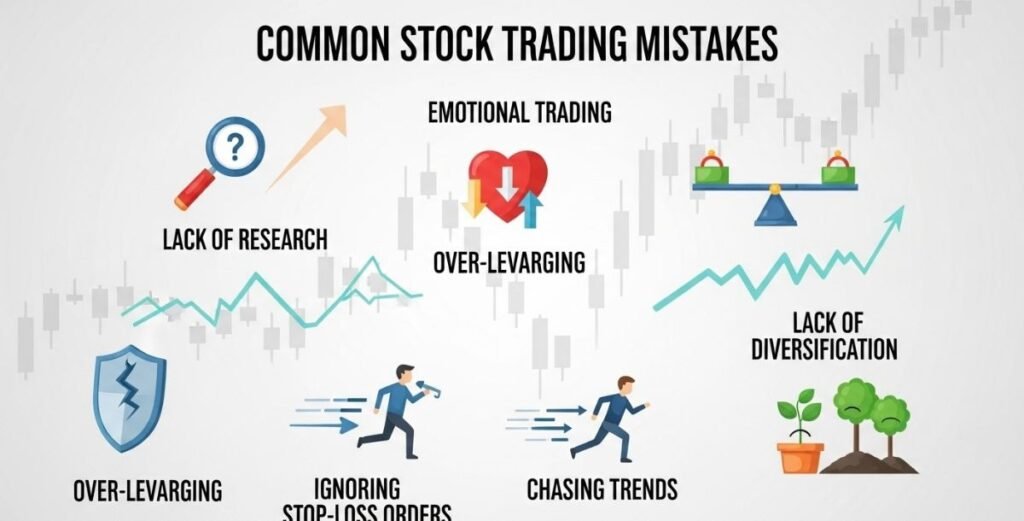
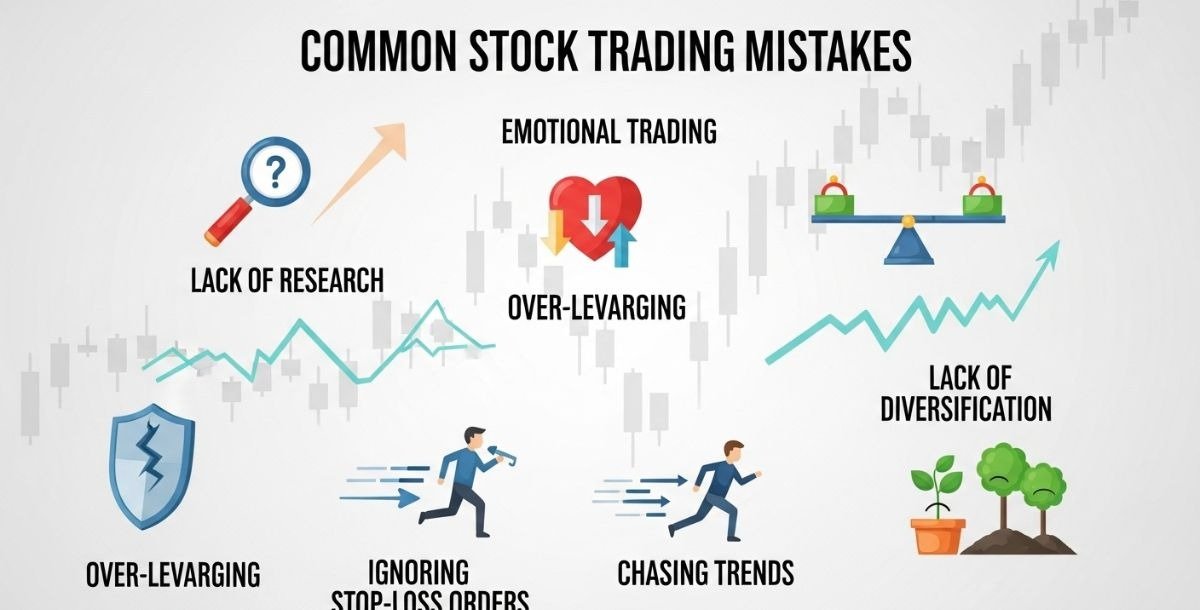
The difference between long-term success and unneeded losses is the common stock trading mistakes that every investor must avoid. Most of the novices and even experienced traders end up developing bad habits that damage their portfolios. The errors may be made out of emotional choice, absence of strategy, or inadequate understanding of the market. This extensive guide will tell you what such mistakes are, why they occur, and how you can prevent them using realistic strategies, tools,s and best practices.
How Investors commit Stock trading errors.
Apprehending the Fundamental Issue
The stock market may be frightening. Unpredictable price fluctuations, financial news, and market trends put pressure on making fast decisions. A good number of investors commit errors because they are unprepared or inexperienced. In general, some of the most typical pitfalls are emotional trading, overconfidence, flawed research, and the inability to manage risk. These problems even build up without realizing, diminishing returns, and contributing to stress.
Actions to Eliminate the Most Notorious Errors
The first step is education. Knowledge in market fundamentals, technical and fundamental analysis, and risk management would form a good base. Informed decision-making is done through the use of reliable trading platforms and tools. Discipline is another good solution. It is important not to get into impulsive decision-making by developing a trading plan and adhering to it. Knowledge, strategy, and working tools are important in enabling an investor to overcome the hurdles.
Trading mistakes of Common Stock explained
Trading Without a Plan
Most investors rush into the market without a proper plan. This commonly results in the tendency to buy high and sell low, trade the trend, or respond to the hype.
Solution: Develop a trading plan that will provide objectives, entry points, exit points, and risk management. Adhere to the course of action.
Allowing Instincts to make decisions
Mistakes could be triggered by fear and greed. Gains can be lost by panic selling in down periods or overbuying in boom periods.
Remedy: Automated stop-loss orders and position sizing help in eliminating the emotional factor. Be patient and not hasty in dealing.
Ignoring Risk Management
Accounts can be wiped out in no time by not defining risk or over-leveraging positions. Risk management cushions the capital in turbulent markets.
Solution: You should only invest a fraction of your capital investment in each trade, have stop-loss limits, and you should not invest all your funds in one industry.
Lack of Research
Uninformed decisions are made by investing without conducting an analysis of the fundamental of the company or the market trends. It is dangerous to be dependent on tips or social media.
Solution: Carry out a study of the performance, earnings, market conditions, and economic indicators of the company. Tap into stock screeners, stock broker research water, and financial news websites.
Overtrading
Attempts to speculate on all market trends lead to exorbitant charges and errors. Impatience or pursuit of short-term returns is the cause of overtrading.
Solution: Trade in quality, rather than quantity. Trading on signals and strategy as opposed to market noise.
Failure to Diversify Portfolio
Allowing the money to be invested in a single stock is a risk. The volatility of the market may have a devastating impact on concentrated positions.
Remedy: Have diversified investments in industries, spheres, and assets. Fine-tuning between growth and stable dividend stocks.
Ignoring Long-Term Goals
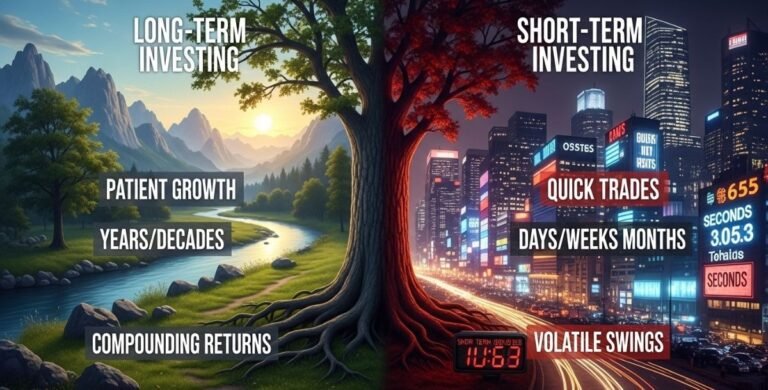
There are those investors who are only after short-term gains. It results in stress, inaccurate decision-making, and failure to attain compounding benefits.
Resolution: Converge trades to the long-term financial objectives. A balanced mix of short and long-term investments should be employed.
Best Practices in Smart Stock Trading
Establish Specific Objectives:
Decide whether you should grow, earn, or speculate. Goals determine strategies.
Using a Routine:
It is important to check the market on a routine but it should not be easily triggered by small movements.
Keep a Trading Journal:
Note down decisions, mistakes, and results. Revise to better strategize.
Trade with Technology: Stock screeners, trading platforms, and alerts help in managing the trade.
Ongoing Learning:
Take part in webinars, read market analysis, and perform demo trading in order to gain competence and confidence.
The Safer Trading Tools and Services

Trading systems and platforms like TD Ameritrade, E*TRADE, or Interactive Brokers are reliable brokers and offer research tools, real-time data, and education. Small-cap beginner-friendly investment applications, such as Webull or Robinhood, allow investing in fractional shares. Such financial sources as Bloomberg or Yahoo Finance are useful to follow trends and events on the market. The tools enable the investors to make sound decisions, minimize errors, and enhance portfolio management.
Who Is to Pay for Attentive Interrogation?
Novices are the most likely to commit errors because they lack experience. But even seasoned traders may lapse into the cliché mistakes when the market goes volatile. The risk management, research, and sticking to the strategy should be prioritized by small investors, part-time trader,s and those doing personal portfolios.
FAQs
What is the most popular stock trading error?
The most common mistake is trading without planning. Investors will tend to purchase or sell not because of strategy but because of emotion.
What are the best ways to reduce trading errors?
Questions to ask include using a trading plan, trading on risk using stop-losses, conducting research, and not making emotional decisions.
Are long-term or short-term trading the best places to begin with?
Long-term investing helps beginners to minimize risk and build experience before trying to actively trade.
Is technology able to aid in preventing errors?
Yes, platforms, alerts, and stock screeners offer you the tools to control the risk, track positions, and make decisions.
Check up on my portfolio? How often?
Reviews should be made monthly or quarterly. Emotional trading would be a result of over-monitoring.
Conclusion
Mistakes that are common among stock trading to all investors are normally a result of lack of planning, emotionality, or lack of research. Investors can ensure that they save capital and have a high growth potential by learning the fundamentals, developing a trading strategy, managing risk, and relying on trustworthy tools. The second step is easy: decide what you are the most likely to do wrong, follow the best practices, and be consistent and disciplined in your trading operations. Noble behaviors do result in successful long-term performance in the stock market.