Investing vs Stock Trading: The main difference beginners need to know
The difference between stock trading and investing is explained to beginners. Get some insight into the major differences, risks, tools, and step-by-step instructions to make the appropriate selection.

Numerous novices get into the stock market with a single aim of multiplying their finances. But confusion begins as soon as they listen to two words once again and again, trading and investing. This is the reason why Explaining the differences between Stock Trading vs Investing: What Differences should a beginner know. is a critical subject for any first-time beginner. The beginners do not realize the distinction and therefore end up using the incorrect strategies and experiencing unnecessary losses.
The Foundational Issue That Novices Have Problems With
Lack of clarity is the greatest issue that beginners experience. Trading and investing are different names for the same thing, according to the views of the majority of people. They thus blindly take up advice and plunge into dangerous choices, and expect to make money without planning. This misconception leads to stress, emotional judgments, and financial errors at the beginning of the path.
A Reason Why a Bad Strategy is a Bad Idea
Beginners who mix trading with investing take risks that they should not take. Sensation in the short term triggers panic and neglect of long-term targets. Most of them give up when they lose, not because they have been defeated by the market, but because they have taken the wrong strategy in their scenario. To avoid such early failures, Understanding Stock Trading vs Investing Explained: Key Differences Beginners Should Know can be used.
What Is Stock Trading?

Stock trading involves short term strategy where emphasis is laid on moving prices. Traders are trading stocks very often to provide the benefit of market fluctuation instead of company advancement.
The Process of Stock trading step by step
To begin with, a trader examines the price charts and market trends. They then pick a stock that is exhibiting a short-term movement. Then they trade on a trading platform and get out when they hit a small profit or loss target. Punishment and time are very important in success.
In Trading, Tools and Services have been employed
The stock traders are dependent on online trading platforms, real-time charts, technical indicators, stop-loss applications, and fast execution applications. These tools are useful in risk management and responding promptly to market dynamics.
What Is Investing?
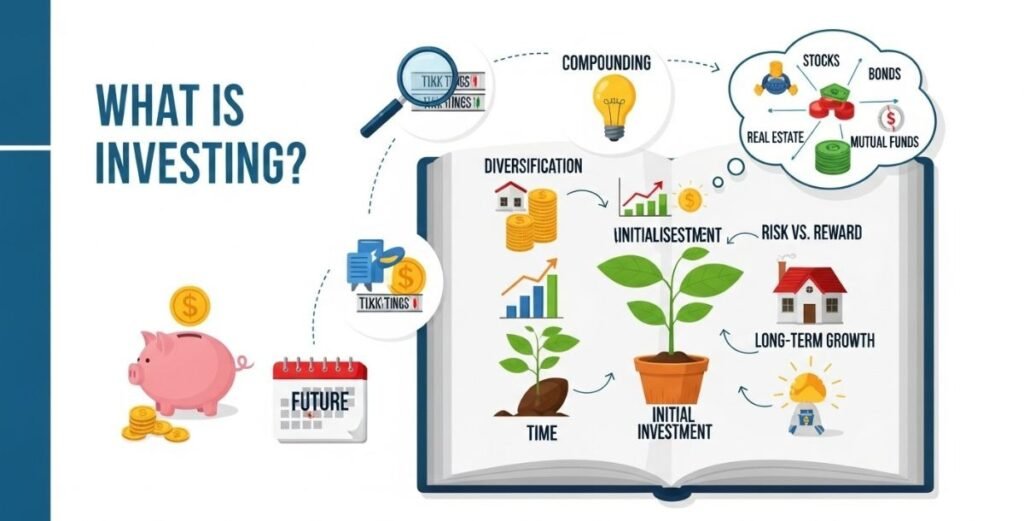
Investment is a long-term process that involves the accumulation of wealth over time. Shareholders purchase the stocks of companies that they think will expand in the future and retain them for several years.
Investing explained step by step
To begin with, investors study the company, industry, and financial basics. They then inject funds into the stock or fund of choice. With time, they will gain from price appreciation, dividends, and growth in compounding without having to trade frequently.
Usual Investing Tools and Solutions
Brokerage accounts, ETFs, mutual funds, retirement accounts, and tools to track portfolios are usually used by investors. These services assist in long-term financial planning and diversification.
Stock Trading vs Investing Explained: Key Differences Beginners Should Know
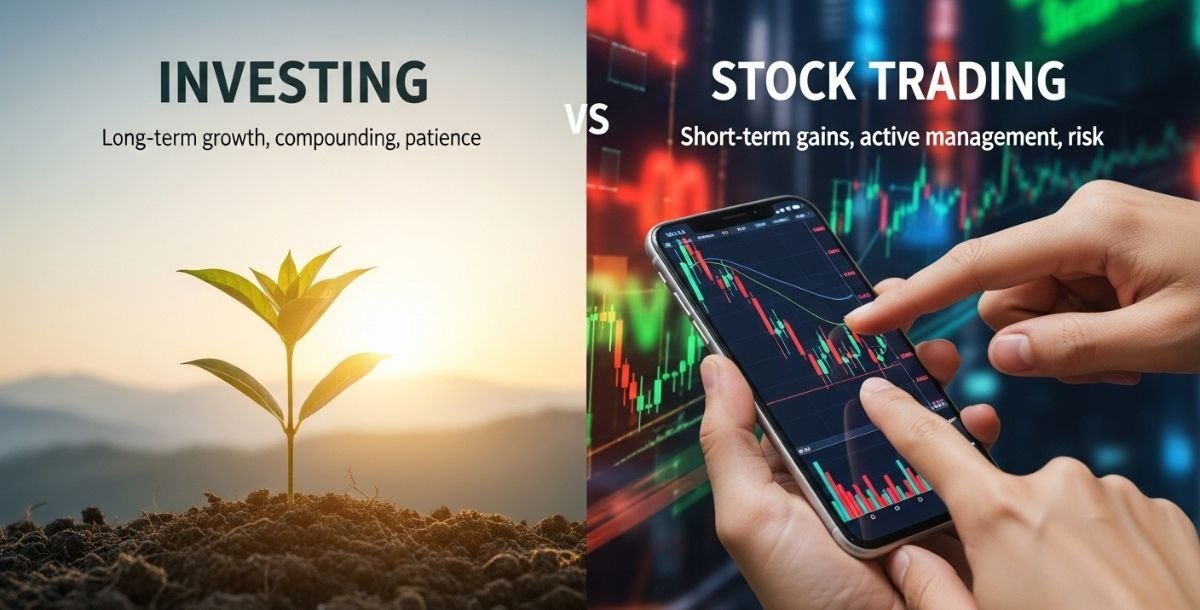
The time horizon is the major one. Trading is geared towards short-term returns, whereas investing is geared towards long-term growth. Trading involves being attentive, emotionally stable, and making fast decisions. It takes time and persistence, as well as faith in the long-term market trends, when investing. Risk exposure also differs. The short-term risk of trading is greater because of the high frequency of entry into the market. The risk is diversified over time with an investment, whereas the short-term volatility is lessened by the investment. Costs are also important because trading can be characterized by a significant level of costs and taxes in comparison with investing.
Which of the two is the best place to start?
Investing is a safer place to start in most cases. It involves fewer activities daily and lets one learn and remain engaged. Trading can be appropriate for those people who can devote time, control their emotions, and take more risks. Other novices will use a hybrid model where they will invest the majority of their funds in the long run and make use of a small part to acquire the art of trading.
Top Ten False Moves of Beginners
The novices also trade without education, based on tips on social media or their emotions. Others speculate, neglect risk management, or they are hoping to gain quick returns. Some of the most frequent errors are panic selling, failure to diversify, and having unrealistic expectations in the context of investing. These mistakes can be avoided by first of all coming straight to the point of distinction between a trade and an investment.
Best Practices for Success in the Long-term
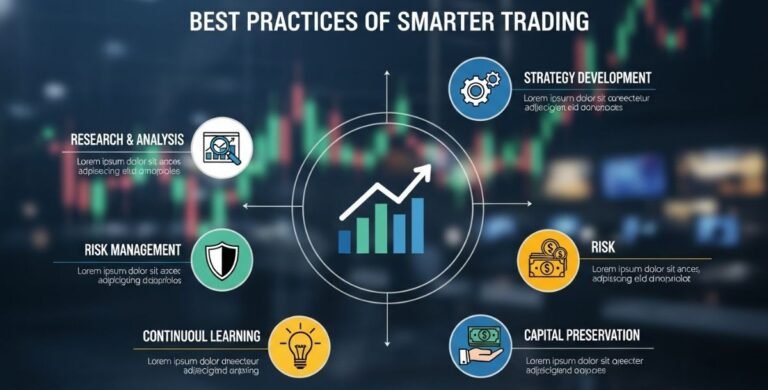
Have precise financial objectives. Select a plan that best suits your risk-taking and lifestyle. Work on credible platforms and tools easy to use. Remember to keep it under control, work on learning, and then raise the capital exposure. Regularity and order are of greater importance than speed.
Practical Solutions for Beginners

The most reasonable solution is education. Faith in dummy trading accounts to practice. Diversified funds may be the initial step that long-term investors take to decrease their exposure. Market simulators, learning platforms, and financial tools help beginners to develop confidence in a safe manner.
FAQs
Should beginners be in stock trading?
The beginner can find stock trading a risky exercise because of the volatility of the market and emotional stress.
Is there more security in investing or trading?
Yes, investment is usually less risky as it is long-term oriented, and the risk of market timing is less.
Is it possible to begin investment with little amount?
Yes, there are numerous platforms that can be used to make small investments with fractional shares and ETFs.
What is the time required to realize the benefits of an investment?
Investment is normally realized with some significant payoffs after several years, not weeks or months.
Do I require equipment to begin trading or investing?
No, fundamental platforms, charts, and portfolio tools are needed to make informed decisions.
Conclusion
The reason why this difference between Stock Trading and Investing Explained: Key Differences Beginners Need to Know will enable beginners to make the appropriate choice. Trading is in the short-term, active strategies, and investment is in long-term financial development. The second thing is to assess your objectives, select the appropriate tools, and begin with a plan that is appropriate regarding your level of risk and your future requirements.